

I stopped trying to define AI SEO with a acronym salad the day a client asked, “Will this replace our SEO retainer?” The honest answer: no—but it changes what ‘winning search’ looks like. If your brand is not named correctly in an AI Overview, or your pricing is wrong in Perplexity, you are losing deals while your rankings report still looks green.
AI SEO, the way I practice it, is the work of making your company easy to fetch, easy to quote, and hard to misrepresent across classic search, AI Overviews, answer engines, and the assistants baked into software your buyers already use.
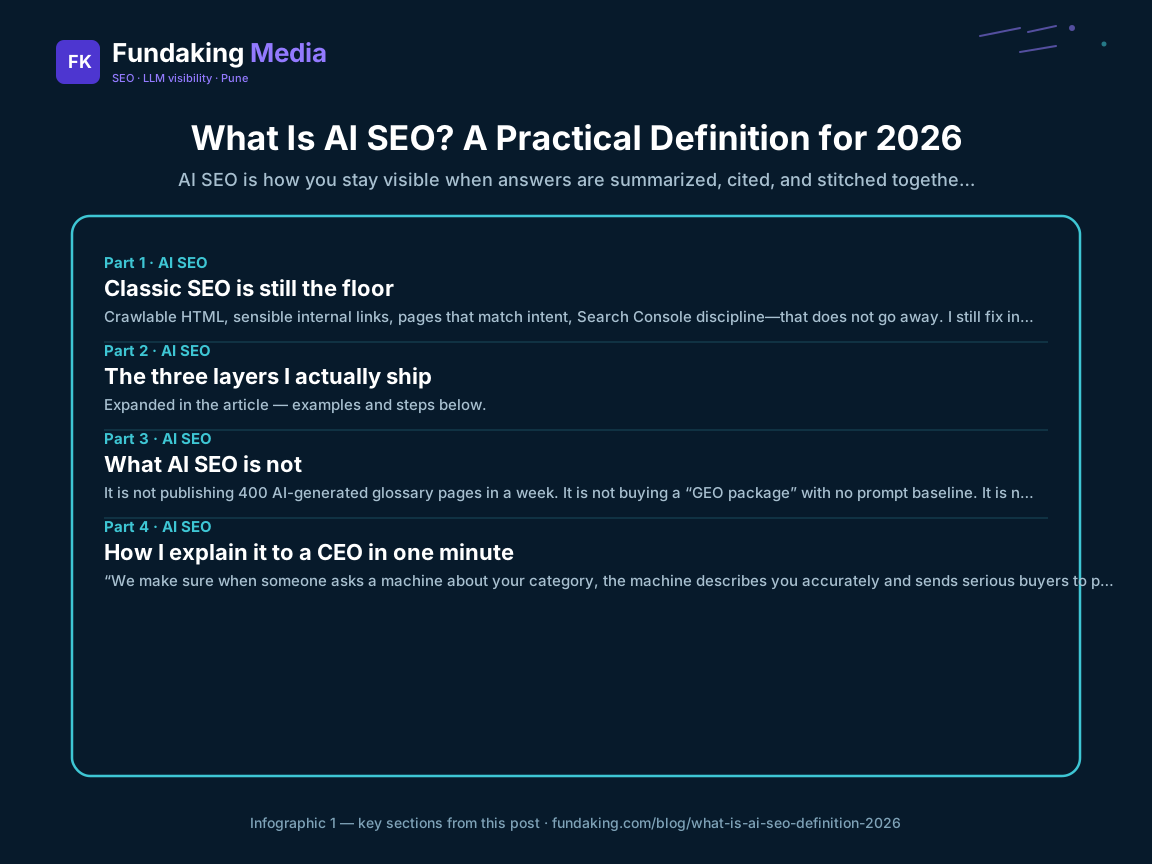
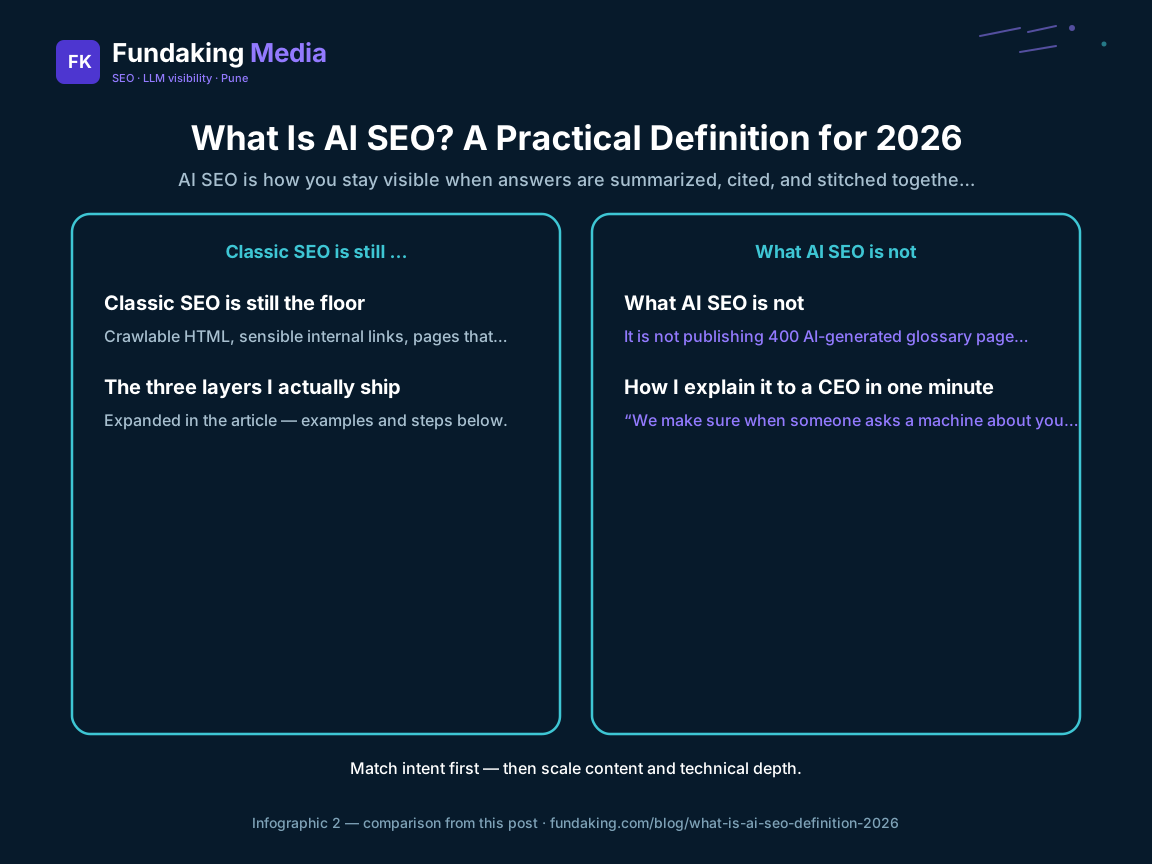
Classic SEO is still the floor
Crawlable HTML, sensible internal links, pages that match intent, Search Console discipline—that does not go away. I still fix index bloat, JavaScript rendering, and Core Web Vitals. Without that floor, you are asking models to cite pages bots struggle to read.
What changes is the ceiling: you are optimizing for passages and entities, not only positions.
The three layers I actually ship
1. Technical layer — Can Googlebot and other fetchers get the facts? Are canonicals clean? Does schema match visible copy? I log AI-related user-agents the same way I log Googlebot when a client cares about citations.
2. Semantic layer — Do you have a page for the sentence buyers type into chat? “CRM for remote sales teams in India” is a different asset than “best CRM 2026.” I map prompts from sales calls, not only Keyword Planner exports.
3. Reputation layer — Models trust brands that look consistent everywhere: site, LinkedIn, G2, reviews, podcasts, docs. When those disagree, assistants pick a median—and you lose control of the story.
What AI SEO is not
It is not publishing 400 AI-generated glossary pages in a week. It is not buying a “GEO package” with no prompt baseline. It is not ignoring classic SEO because “AI is the future.”
It is treating AI surfaces like another SERP slot with its own winners: clear ledes, dated numbers, comparison tables, founder bylines, and BOFU pages humans still need when they click through.
How I explain it to a CEO in one minute
“We make sure when someone asks a machine about your category, the machine describes you accurately and sends serious buyers to pages that convert. We measure that with a prompt library and citation log, not vanity traffic.”
Where I start in week one
- Ten prompts from sales/support
- Screenshot who gets cited today
- Fix the three worst factual errors on site + profiles
- One BOFU page rewrite (comparison or pricing clarity)
That is AI SEO in practice—not a slide deck.
Why founders should care now
AI SEO is how you stay visible when answers are summarized, cited, and stitched together by machines—not only ranked as ten blue links. That is not theory for me — it shows up on discovery calls when organic pipeline stalls or when AI answers describe a competitor instead of your brand. Search and answer engines reward specific, verifiable pages, not generic SEO filler.
If you are evaluating priorities, ask whether this topic touches revenue pages (pricing, product, comparisons) or trust pages (about, case studies, docs). Fix trust and structure before you scale content volume.
Mistakes I see on live sites
- Chasing tactics from Twitter threads without a baseline audit in Search Console and analytics.
- Publishing more blogs when the root issue is indexation, faceted URLs, or slow LCP on money pages.
- Treating AI visibility as separate from technical SEO — crawlers and models both need clean HTML and consistent facts.
- Skipping internal links from new posts to BOFU pages, so traffic lands nowhere useful.
A 30-day workflow you can run in-house
Week 1 — Baseline: Export top landing pages by impressions, list five prompts or queries buyers actually use, screenshot current AI/search results for your brand.
Week 2 — Fix facts: Align pricing, integrations, and founder bio across site, GBP, and LinkedIn. One wrong number in an old blog comment can poison summaries.
Week 3 — Ship one asset: Pick a single page tied to “What Is AI SEO? A Practical Definition for 2026” and rewrite the lede, add a comparison table or checklist, improve internal links.
Week 4 — Measure: Track qualified leads or demo requests from organic — not rank positions alone. Re-run your prompt library and log citation changes.
When to bring in a consultant
Bring in senior help when engineering bandwidth exists but prioritization is missing — or when migrations, JavaScript rendering, or international structure block progress. I cap Fundaking engagements so strategy stays founder-led; book a call if you want a second opinion on scope.
Related reading on Fundaking
Category focus for this article: AI SEO.
I am Rahul Agarwal, founder of Fundaking Media. I help founders in Pune and across India with technical SEO, LLM visibility, and local lead gen.

 Rahul Agarwal