

When AI Overviews showed up in my clients’ Search Console, clicks dipped on some head terms—and held steady on others. The difference was never “more AI content.” It was clarity, structure, and pages that answer one job well.
Start with queries where an overview already appears
I pull 90 days of Search Console and flag queries with high impressions, soft CTR, and visible overview in manual checks. Those are your battleground URLs—not every keyword in the plan.
For each query I open an incognito window and screenshot who gets named, which URLs are linked, and whether the overview satisfies the intent without a click. If it does, I stop chasing position 1 fantasies and shift to brand accuracy and next-step queries (comparison, pricing, implementation).
Page patterns I see cited
Definitions in the first 120 words with the product/category name repeated plainly.
Short H2s phrased as questions buyers actually type.
Tables for comparisons, steps for procedures, and dated stats when you claim outcomes.
Internal links from the cited page to BOFU pages so humans who do click land somewhere useful.
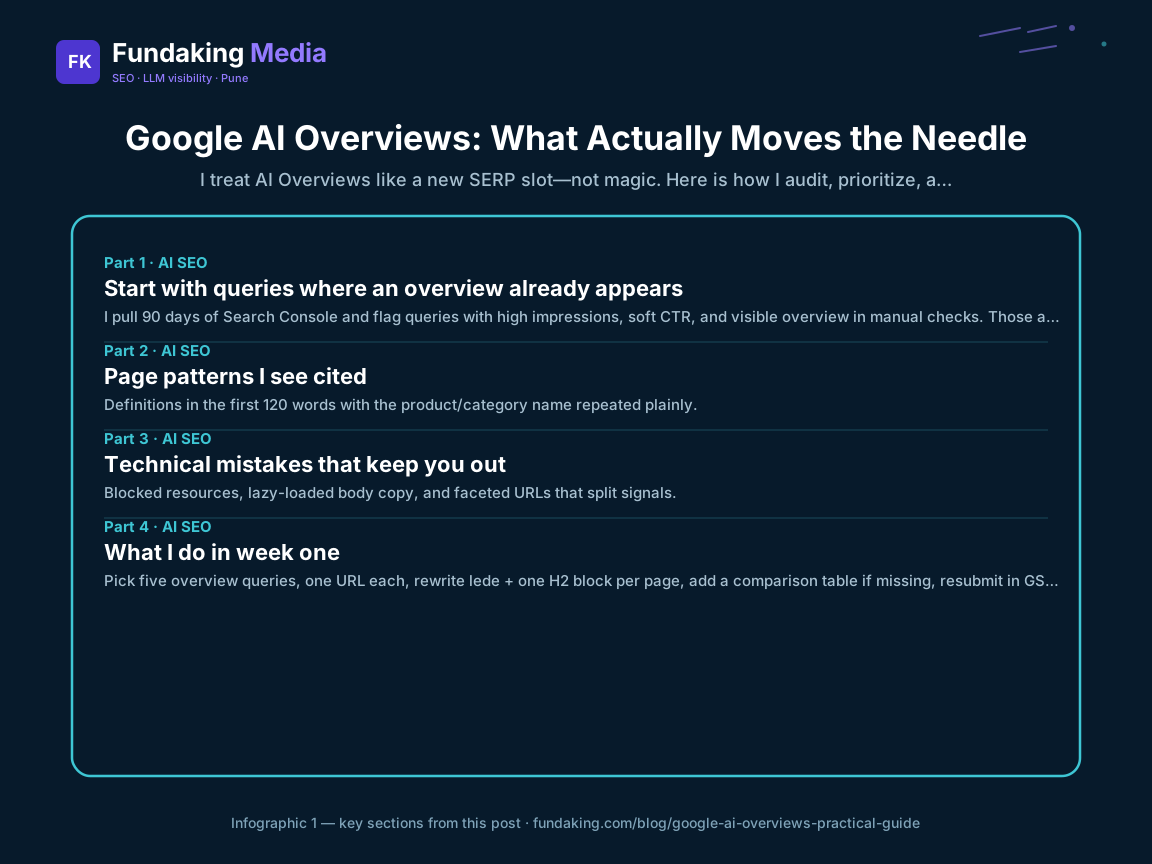
Technical mistakes that keep you out
Blocked resources, lazy-loaded body copy, and faceted URLs that split signals.
Conflicting facts between FAQ schema and visible copy—models cross-check.
Thin affiliate-style pages with no first-party proof.
What I do in week one
Pick five overview queries, one URL each, rewrite lede + one H2 block per page, add a comparison table if missing, resubmit in GSC, re-test in 14 days.
Why founders should care now
I treat AI Overviews like a new SERP slot—not magic. Here is how I audit, prioritize, and measure pages that earn the summary and the click. That is not theory for me — it shows up on discovery calls when organic pipeline stalls or when AI answers describe a competitor instead of your brand. Search and answer engines reward specific, verifiable pages, not generic SEO filler.
If you are evaluating priorities, ask whether this topic touches revenue pages (pricing, product, comparisons) or trust pages (about, case studies, docs). Fix trust and structure before you scale content volume.
Mistakes I see on live sites
- Chasing tactics from Twitter threads without a baseline audit in Search Console and analytics.
- Publishing more blogs when the root issue is indexation, faceted URLs, or slow LCP on money pages.
- Treating AI visibility as separate from technical SEO — crawlers and models both need clean HTML and consistent facts.
- Skipping internal links from new posts to BOFU pages, so traffic lands nowhere useful.
A 30-day workflow you can run in-house
Week 1 — Baseline: Export top landing pages by impressions, list five prompts or queries buyers actually use, screenshot current AI/search results for your brand.
Week 2 — Fix facts: Align pricing, integrations, and founder bio across site, GBP, and LinkedIn. One wrong number in an old blog comment can poison summaries.
Week 3 — Ship one asset: Pick a single page tied to “Google AI Overviews: What Actually Moves the Needle” and rewrite the lede, add a comparison table or checklist, improve internal links.
Week 4 — Measure: Track qualified leads or demo requests from organic — not rank positions alone. Re-run your prompt library and log citation changes.
When to bring in a consultant
Bring in senior help when engineering bandwidth exists but prioritization is missing — or when migrations, JavaScript rendering, or international structure block progress. I cap Fundaking engagements so strategy stays founder-led; book a call if you want a second opinion on scope.
Related reading on Fundaking
Category focus for this article: AI SEO.
Deep dive: applying “Google AI Overviews: What Actually Moves the Needle” on a real site
When I audit a site for this topic, I start with crawl stats and Search Console landing pages — not a keyword export. I want to see which URLs already earn impressions and whether the title and H1 promise the same thing. Misalignment here is the silent killer for both classic rankings and AI citations.
Technical checks I run first
- Confirm money pages return 200 without redirect chains and appear in the XML sitemap.
- Compare rendered HTML vs view-source for key definitions (pricing, integrations, locations).
- Validate Organization, WebSite, and Article or BlogPosting schema against visible copy.
- Review internal links: every new blog should point to at least one service page and one proof page (case study or about).
Content checks
- Does the first screen answer who this is for and what changes after reading?
- Are claims dated or sourced when you mention benchmarks or percentages?
- Is there a downloadable or scannable asset (checklist, table) assistants can quote?
Measurement
Track branded search lift, assisted conversions from blog landing pages, and a simple prompt/citation log if you care about LLM visibility. Rankings alone are a lagging indicator; pipeline is the decision metric.
If you want help prioritizing, contact Fundaking for a free strategy call — I will tell you if this topic needs a consultant, better execution in-house, or both.
I am Rahul Agarwal, founder of Fundaking Media. I work with founders on technical SEO, LLM visibility, and local lead gen—usually from Pune, often remotely across India and abroad. If this helped, share it with whoever owns search at your company.

 Rahul Agarwal