

In-app search is literal. If the shopper types “cold pressed oil” and your title says “artisanal wellness elixir,” you lose. This spoke deepens the quick commerce visibility playbook.
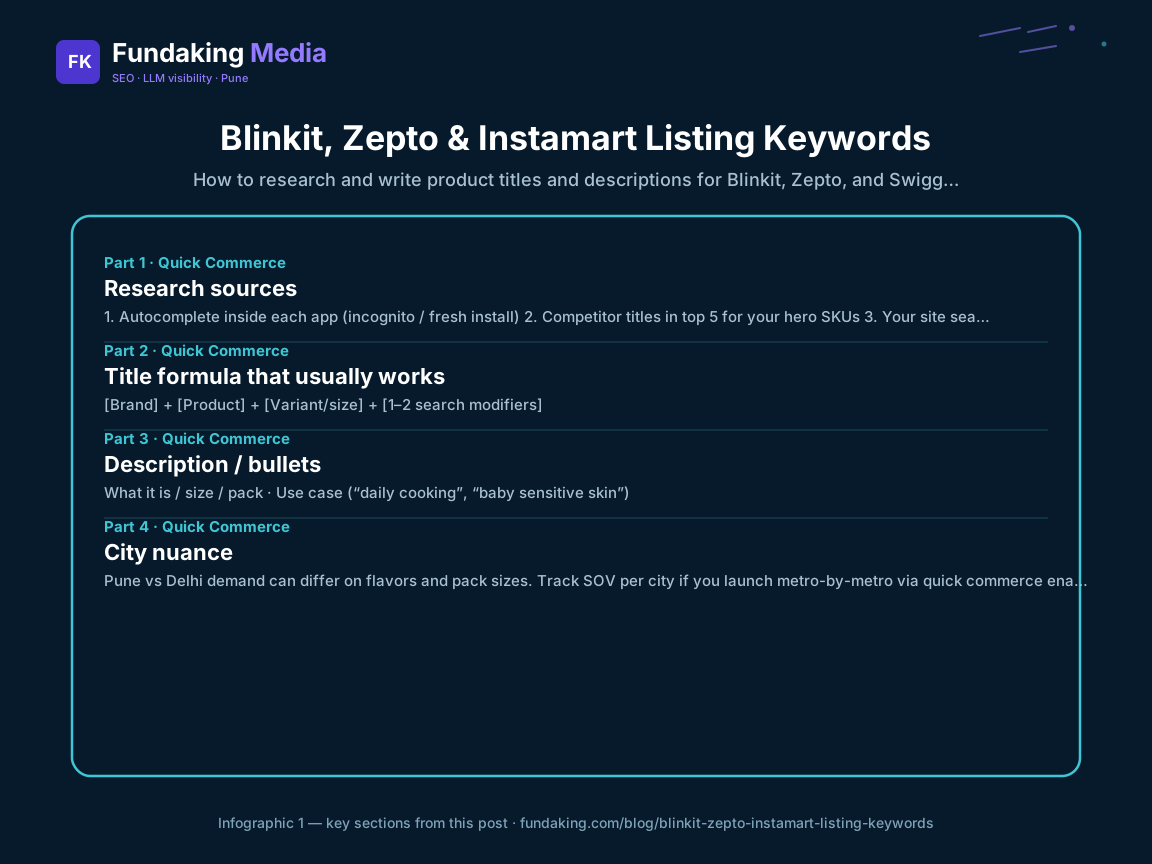
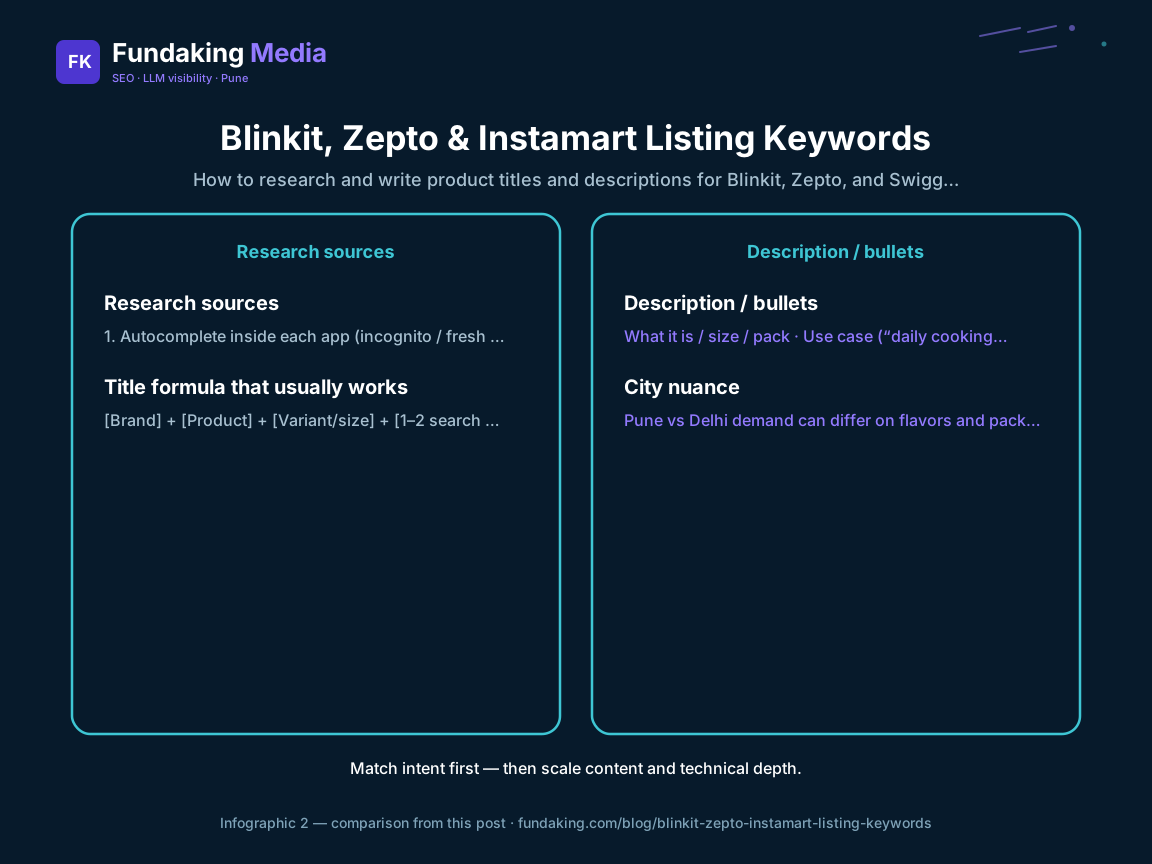
Research sources
- Autocomplete inside each app (incognito / fresh install)
- Competitor titles in top 5 for your hero SKUs
- Your site search / Shopify search logs
- Support chats (“do you have X?”)
Build a sheet: search_term → volume proxy (rank of competitor) → preferred title token → banned fluff words.
Title formula that usually works
[Brand] + [Product] + [Variant/size] + [1–2 search modifiers]
Example: FarmGold Groundnut Oil 1L Cold Pressed — not a poem.
Keep platform character limits. Put the highest-intent modifier early. Pair with catalogue content ops so variants do not cannibalize each other.
Description / bullets
- What it is / size / pack
- Use case (“daily cooking”, “baby sensitive skin”)
- Differentiator with proof
- Storage / FSSAI where relevant
No keyword stuffing paragraphs. Apps and AI shopping surfaces prefer scannable facts — see product data feeds.
City nuance
Pune vs Delhi demand can differ on flavors and pack sizes. Track SOV per city if you launch metro-by-metro via quick commerce enablement.
FAQ
Same title on all three apps? Same core tokens; tweak to each platform’s length and category taxonomy.
Hindi terms? Where shoppers type Hinglish (“sabun”, “atta”), include those tokens naturally.
Related reading on Fundaking
- Quick Commerce SEO & Visibility Playbook (India)
- Quick Commerce Catalogue Content Ops
- Quick Commerce SEO & Visibility Playbook (India)
- SEO for D2C Brands in India (Shopify & Beyond)
- Quick commerce enablement
- Quick commerce listing audit call
Rahul Agarwal — Fundaking Media. SEO consultant based in Pune / Baramati, serving founders across India.
 Rahul Agarwal